One of the many things that the Three Amigos – Nick, Sergio and Brad – have in common is that, as much as we love to read mysteries, we adore watching them every bit as much! That’s why we talk about movies nearly every time we get together and why we’ve drafted about The Greatest Mystery Films, the Fox Charlie Chan series, the Rathbone-Bruce Sherlock Holmes films, the best films noirs of 1944, and the best films noirs of 1955. These conversations are what I love the most; heck, it’s why I’ve been blogging about my favorite genre for the past eleven years. It’s why Sergio started his brilliant podcast, Tipping My Fedora (after years of having a brilliant blog of the same name.)
And it’s why we’re here today – to select the twenty greatest film performances of a sleuth. As (nearly) always, our draft will follow the structure of my favorite film podcast, Screen Drafts. The first thing we had to do, though, was come up with the parameters for who qualifies to make this list. Here is what we came up with:
- We are considering the entire history of film, from the silent movie days to the movies that came out last Friday.
- No performers who appeared as a detective solely in television or created their performance for TV first qualify. If an actor played the role in the movies first and then appeared in the role on TV, they do qualify. (We will definitely tackle a Greatest TV Detectives draft in the future!)
- The detective being portrayed must be a major figure in the plot: they don’t need to have the most screentime, but they should play a major role in solving the mystery taking up most of the screen time. They do not have to succeed in solving the mystery, but their investigation is primary.
- The detective in question may have first appeared on the pages of crime fiction or they may be an original construct created for the film(s) in which they appear.
- It doesn’t matter whether the sleuth has appeared in one film or in many films; either qualifies. However, if they have made multiple appearances, the drafter is required to name a specific film as his “best” performance in the role.
- If a detective has been portrayed by multiple actors, any of those performances is eligible; this means, for example, that in a list of twenty, there could be multiple Sherlock Holmeses.
As in Screen Drafts, we created a serpentine draft of the Top Twenty Screen Sleuth Performances. We did this by randomly selecting our order and proceeding sequentially. Each player gets SIX picks on the list, with the remaining two picks coming from YOU, our readers. You were asked to suggest your own favorite performances, and these suggestions were compiled by me. You managed to name seventeen different sleuth performances, and the top two choices (the ones that received the most mentions) will be guaranteed a spot on the list. We each received one VETO, which allows us to take another player’s pick of the list, either in the attempt to keep it off forever or perhaps to push it higher.
The way READERS CHOICE picks will be placed is that at any time a player can announce that he wants to take the Readers’ turn and place one of the titles on the list. That choice can be vetoed by another player, but only for the purpose of pushing the title higher. Once that Readers’ Choice turn is over, the player will then take his regular turn.
Our randomizer determined that we would select in the following order:
- Sergio
- Nick
- Brad
Here, in ascending order then, is our list, along with each player’s comments on the choice he made at each turn. Sit back, relax, and discover what, for the Three Amigos and, I’m sure, many of you out there, constitutes “the stuff that dreams are made of.”
* * * * *
20. Sergio played Easy Rawlins, as played by Denzel Washington, in Devil in a Blue Dress (1995).
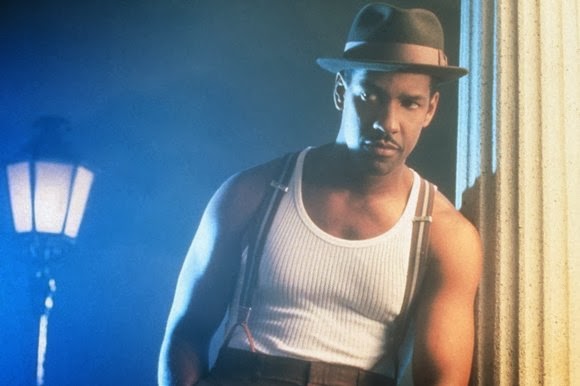
“There have been seventeen novels so far. Rawlins marked an important development in the genre – more substantial than, say, John Ball’s Inspector Tibbs, as the books are rooted in history and are less concerned with plot – and are, in fact, far from traditional hard-boiled mysteries. The 1995 adaptation is a fine film, one in which the theme of race in America as explored here in “passing” is handled with great subtlety and dexterity. Washington is not my favorite thespian, though he isn’t deadliest star, and he brings great charisma to the role.”
19. Nick played The Dude, as played by Jeff Bridges, in The Big Lebowski (1998)
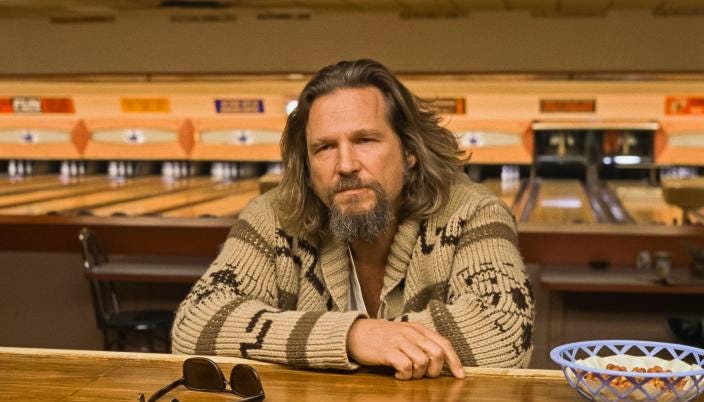
“The “unwilling sleuth” is a well-used trope of the detective genre, redefining who a detective is and how they solve crimes. When it comes to the unwilling detective, few examples are as solid as The Dude. You might know him too as “His Dudeness,” “Duder,” or “El Duderino.” When I first watched Lebowski in high school, I didn’t quite get it. I didn’t get on with its off-kilter humor or surrealistic touches, but on a recent rewatch, I found myself utterly taken with the film, its quirky sensibilities, and the powerhouse performances from Bridges and John Goodman. Crucially, The Dude’s stoner sensibility actually gels remarkably well with the behavior of the prototypical hardboiled P.I. as he floats from one scene to the next if not to solve a murder case but to find the guys who soiled his carpet. After all, it really did tie the room together.”
18. Brad played Miss Hildegarde Withers, as played by Edna Mae Oliver, in Murder on a Honeymoon (1935).
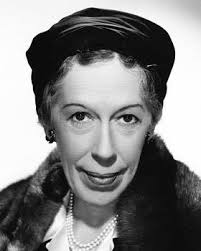
“From the outset, Edna Mae Oliver embodies the perfect American spinster. She’s NOT a Miss Marple-type, but oh, how I would have loved to see her play Patricia Wentworth’s Miss Silver, and she is the perfect choice to play Stuart Palmer’s schoolteacher-sleuth. Unfortunately, she only made three of the six Hildegarde Withers films produced by RKO, and while I like Helen Broderick in all her acerbic roles, she is saddled with a weak story in the fourth film. Sadly, Zasu Pitts is badly miscast in the final two films of the series.As mysteries go, Oliver’s films actually get better as they go along, so while she debuted in The Penguin Pool Murder (1932) and continued with Murder on the Blackboard (1934), I picked the third film as the best (Honeymoon was co-written by Robert Benchley). The greatest fun is the repartee between Oliver’s Miss Withers and Detective Inspector Oscar Piper (James Gleason).”
17. Sergio played Detective William Somerset, as played by Morgan Freeman, in Seven (1995).
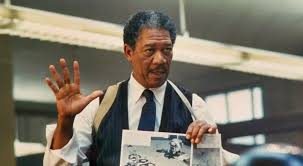
“The character is named for Somerset Maugham, which is a good thing (hence the OF HUMAN BONDAGE joke in the film). He brings great intelligence and humanity to the film, a necessary counterbalance to the John Doe character, who is less of a person and more of an existential threat. As the film develops, Somerset goes from partner / mentor to a genuine father figure and that is very much the role he assumes by the end.”
16. Nick played Batman, as played by Robert Pattinson, in The Batman (2022)
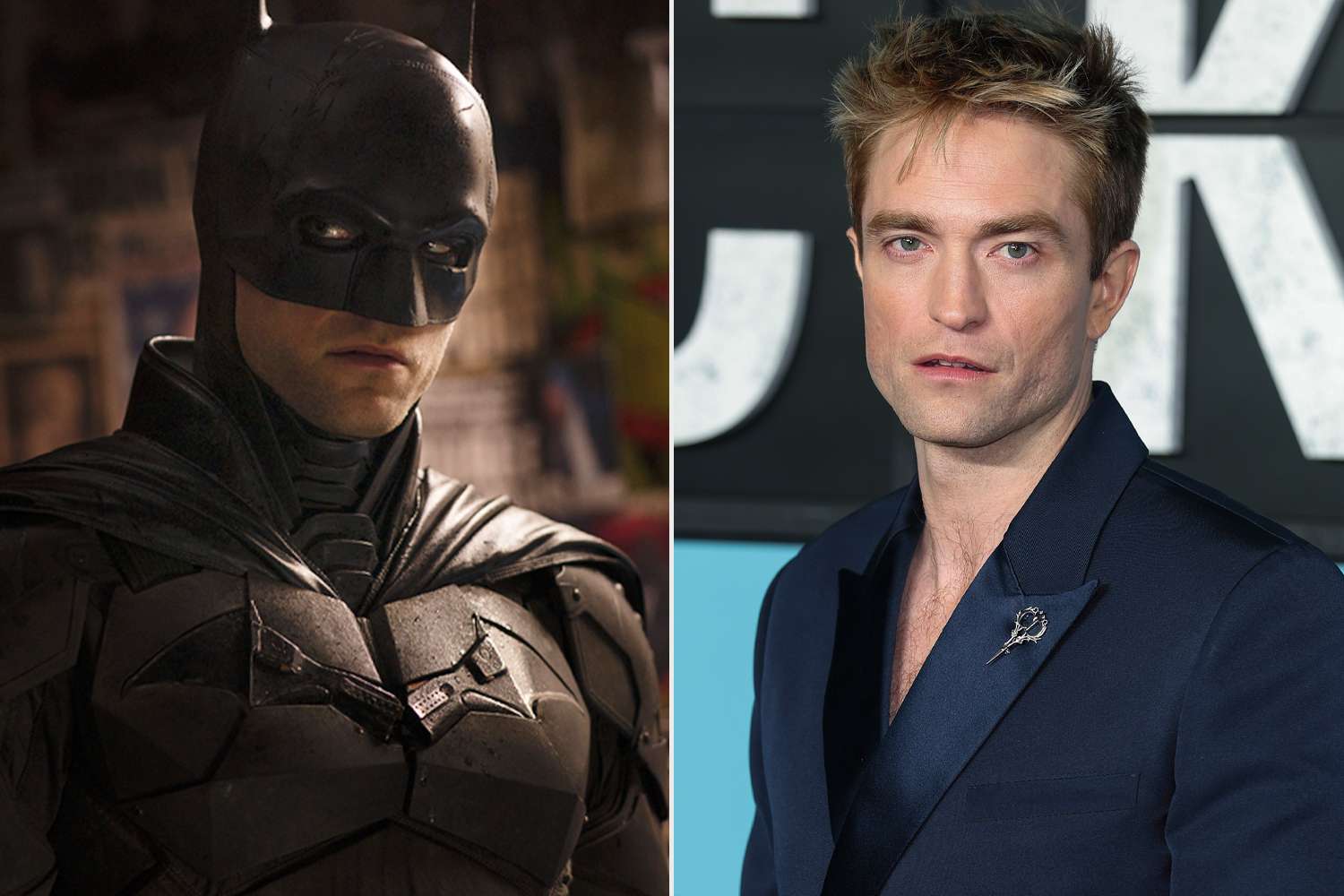
“It’s easy to forget after almost 90 years that the Caped Crusader was originally conceived as “the world’s greatest detective.” I have never gone in much for superhero stories, but Batman has always been a favorite of mine, perhaps in part because he fights crime not with powers but with intellect. There have been many iterations of Batman on the big screen over the years – my favorite probably remains Michael Keaton’s turn in the two Tim Burton films – but few of them have really foregrounded Batman’s logical, systematic approach to solving crimes. Matt Reeves’ 2022 film sought to do just that, pulling from a long history of film noir cinema in order to present Robert Pattinson’s Batman/Bruce Wayne solving puzzles and uncovering conspiracy (ala Chinatown or Klute) in his pursuit to bring down The Riddler. I acknowledge the film’s central mystery is flawed and the movie is bloated at three hours, but this take on the Dark Knight is well worth a mystery devotee’s time.”
15. Brad played Marge Gunderson, as played by Frances McDormand, in 1996’s Fargo.
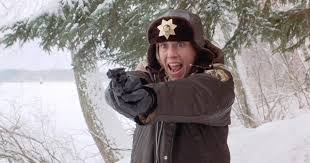
“This role won McDormand a much-deserved Oscar and multiple other awards. Marge is the police chief of Brainerd, the county seat of Crow Wing County, Minnesota. She is seven months (and looks seventeen months) pregnant and possesses a sharp intellect and a disarming manner as she breaks down a kidnapping plan gone horribly wrong, investigates one savage murder after another, and faces down a desperate killer as he tosses his accomplice into a woodchipper. I’m not a fan of hyper-violent films, even those filtered through the Coen Brothers’ charmingly warped sensibilities, but somehow Marge leavens all this with her warmth and down-to-earth philosophy and makes the gore palatable and even a bit endearing.”
14. Sergio played Inspector Maigret, as played by Jean Gabin, in Maigret Sets a Trap (1958).
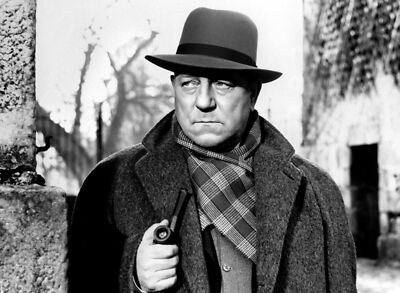
“It may not be Gabin’s best performance (it definitely isn’t, in fact), but he brings great realism and solidity – he seems to do very little and yet is the most satisfying realization of the character for me. The book is an early serial killer story, strong in character and plot, and Gabin is perfectly suited to help bring a superior policier to life. The sequels he appeared in are less strong (especially the third, which is a bit off-piste).”
13. Nick played William of Baskerville, as played by Sean Connery, in The Name of the Rose (1986).
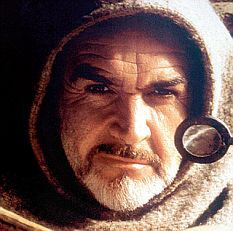
“Despite the fact that I have two copies of Umberto Eco’s novel (a paperback and a first edition hardcover), I have never read his magnum opus: a postmodern take on the detective genre. Regardless, the film version, which strips back some of the author’s commentary, remains a favorite of mine. Its stark location photography is breathtaking and its atmosphere of death and decay within the walls of a fourteenth century abbey really gets under the skin. In the central role of Brother William, a Franciscan friar who uses deductive reasoning to solve problems which his faith cannot, Sean Connery really excels. When one thinks of Connery, one is liable to think of the actor as two-fisted heroes like James Bond of Jimmy Malone (his Oscar-winning turn in the following year’s, The Untouchables). But as a reserved man of logic, Connery turns into a soft, gentle, and delightful performance presaging a similar turn in The Last Crusade. And, despite the fact that the film is leaner and conforms more to the traditional beats of the mystery story, when the truth is ultimately revealed, the story does not pull its punches. It poses the same profound questions Eco asked in his novel and gives its audience something to ponder even after the murderer has been brought to justice.”
12. Brad played Scottie Ferguson, as played by James Stewart, in Vertigo (1958).
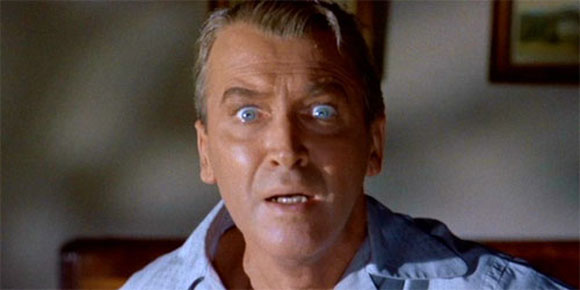
“In a sense, this is the culmination of four detective roles that Stewart played for Alfred Hitchcock. As Rupert Cadell in Rope 1948), he plays a professor who grows increasingly suspicious of the worshipful students he has helped turn into monsters. As L. B. Jeffries (my favorite role), he becomes a detective out of boredom, and the fascinating moral quandary he finds himself in here is that he wants his neighbor to have killed his wife!! As Dr. Ben McKenna in The Man Who Knew Too Much, he is a reluctant sleuth who must rescue his kidnapped son and save a world leader from assassination. I chose John “Scottie” Ferguson for this list because it’s the richest and darkest character of the four and the only official detective on the list. (If you have any doubts that Scottie and Jeff from Rear Windows are connected, check out the blinds in both their apartments!) The best screen sleuths are also exposed as human beings and are subject to all the flaws and tribulations of human character. The result is that the case they work on can have a deep and lasting effect on their lives. Scottie is destroyed at the end, betrayed by his friend, by the woman he loves, and by his own weakness.
11. Sergio played J. J. Gittes, as played by Jack Nicholson, in Chinatown (1974).
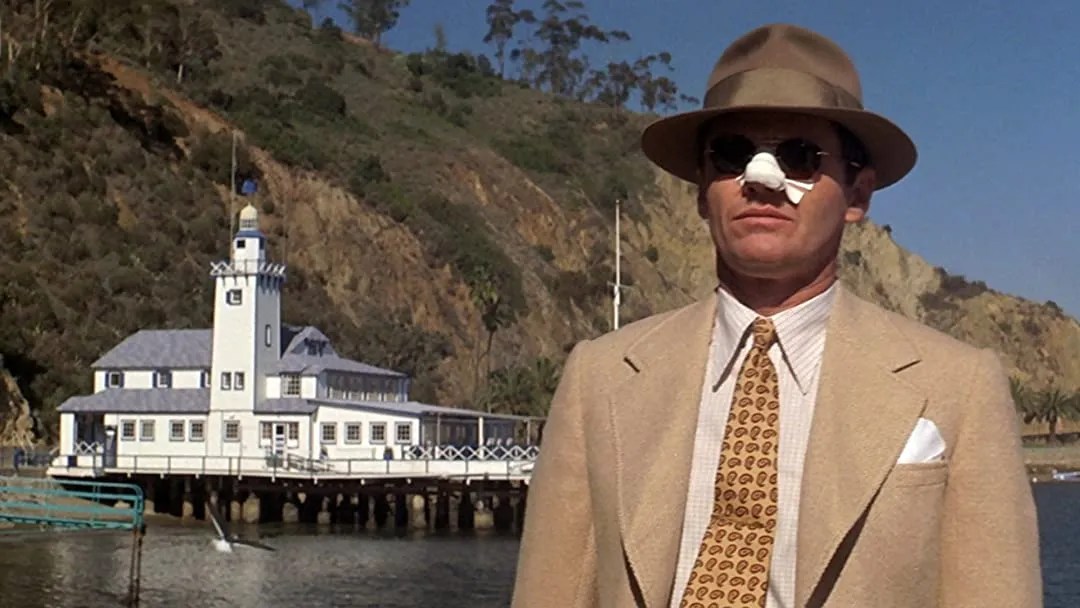
“Beautifully shot and cleverly written, this is a daring film, one with a powerful and unforgettable plot ‘twist’ that is shocking and saddening – and in its own way, revolutionized what American cinema could discuss out in the open. Gettys is a plausibly seedy PI from the 1930s, one whom we instantly dislike for his cynicism and combative personality – but when he finally opens up and lets someone in, the devastation that follows is all the more gut-wrenching.”
10. Nick played Inspector Cockrill, as played by Alistair Sim, in Green for Danger (1946).
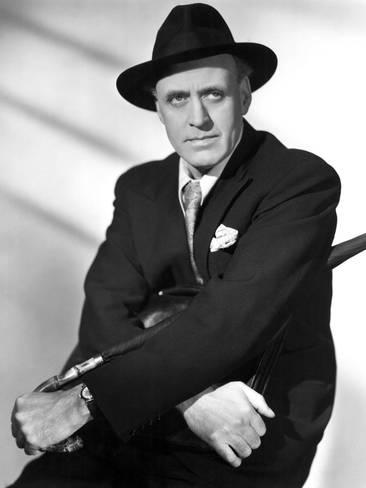
“I love when the introduction of the detective is able to dramatically change the temperature of a story. Alastair Sim’s Inspector Cockrill, the creation of Christianna Brand, is able to dominate the film after he is introduced at the 30-minute mark in this beloved adaptation of Brand’s masterpiece. I can quibble, for sure, with some of Sims’ more overtly comedic and parodic choices playing the part: that aforementioned introduction does, after all, see him indulging in a bit of slapstick as he ducks for cover and falls avoiding a bomb during an air raid. However, overall, Sim’s “Cockie” is much the same as his literary counterpart. He certainly looks the part with his extraordinary head and face and crumpled hat. He is by turns dark and introspective but also twinkly and airy. And Sim could read me the phone book and I wouldn’t mind. Green For Danger is an acknowledged masterpiece of the detective film genre. It had to appear somewhere on this list.”
9. Brad played Hercule Poirot, as played by Peter Ustinov, in Death on the Nile (1978). Sergio vetoed it. In its place, Brad played Charlie Chan, as played by Warner Oland, in Charlie Chan in Paris (1935).

“Oland included numerous Asian characters in his filmography, including Dr. Fu Manchu and Dr. Yogami, the botanist/monster in Werewolf of London. But he is most famous for playing Inspector Chan of the Honolulu police in sixteen films for Fox Studios. (Sadly, three of these are lost forever.) In his lifetime, Oland, a native of Sweden, tried to justify his vaguely Asian appearance by claiming some Mongolian ancestry; others have suggested that his family had kinship with an indigenous people who lived nearby known as the Sami. Both connections are doubtful, and I’m not even going to attempt to justify the casting or argue as to whether the character of Chan should have been ignored by Hollywood until the industry grew enlightened enough to cast the role correctly.
Instead, let’s focus on how wonderful the movies are, both for their adherence to (admittedly formulaic) movie mystery tropes, for the stable of fine “B” (and occasional “A”) actors who appeared onscreen, and for the warm onscreen relationship created by Oland and Keye Luke as Number One Son Lee Chan, which makes for one of the best Holmes/Watson partnerships from old-time Hollywood and perhaps the most significant long-running father/son relationship ever depicted on film. Oland died young, at 58, after walking off the set of Charlie Chan at the Ringside (the script got remade as a Mr. Moto film.) He was replaced by Sidney Toler, another white actor. I enjoy most of the Toler films as well (Charlie Chan in Panama and . . . at Treasure Island are favorites of mine), but Toler made a more sardonic Charlie Chan, and he leaned more into humor in ways that make for even more problematic viewing today.
I picked … in Paris because it’s the first classic Chan movie. The script, co-written by mystery author Philip MacDonald, is really clever. The Chan movies often employed disguise in ways that were far from convincing, but here it works. And this film marked Keye Luke’s debut in the series, so what’s not to love?
8.Sergio exercised the first Reader’s Choice pick and played Benoit Blanc, as played by Daniel Craig, in Knives Out: Glass Onion.
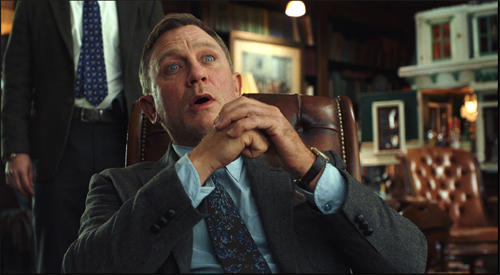
“The most seemingly “impossible” thing about the Blanc films aren’t the intricate mysteries but rather the sheer delight in how Rian Johnson has succeeded in bringing back the supersleuth and making him a huge popular success in this day and age. More than anything, this is a cause for unalloyed joy. May there be many more cases for him to solve. The second film is my favorite for its glamorous look and feel, for the cleverness of the story, and for the fact that the obvious villain is the obvious villain because we should all feel that way about people like that. One caveat: the destruction of the Mona Lisa is absolutely wrong, and the idea that this is what gives our leading lady agency is sickening to me in its too casual disregard for a great artwork. It says everything wrong about the hero (not the sleuth) that they can only see it as a way to upset the villain as opposed to safeguarding something for generations to come. It’s a typically selfish act in contemporary drama where the long view is seen as an act of weakness and tribalism overtakes any sense of commonality.”
7.For his regular turn, Sergio played Philip Marlowe, as played by Dick Powell, in Murder, My Sweet (1944).
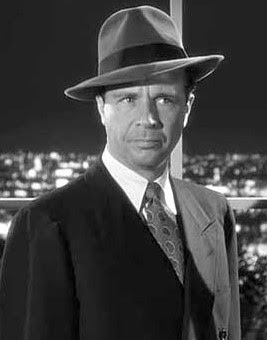
“The first classic film noir PI and, in many ways, he was never bettered. (Although this story was remade in 1975 with Robert Mitchum playing Marlowe, and it is quite good.) Powell is my favorite on-screen Marlowe, bringing the character vividly to life. Shame that he never played the role in a movie again – he did play it on TV once, in an adaptation of The Long Goodbye, but it doesn’t seem to have survived.”
6.Nick played Hercule Poirot, as played by Albert Finney, in Murder on the Orient Express (1974).
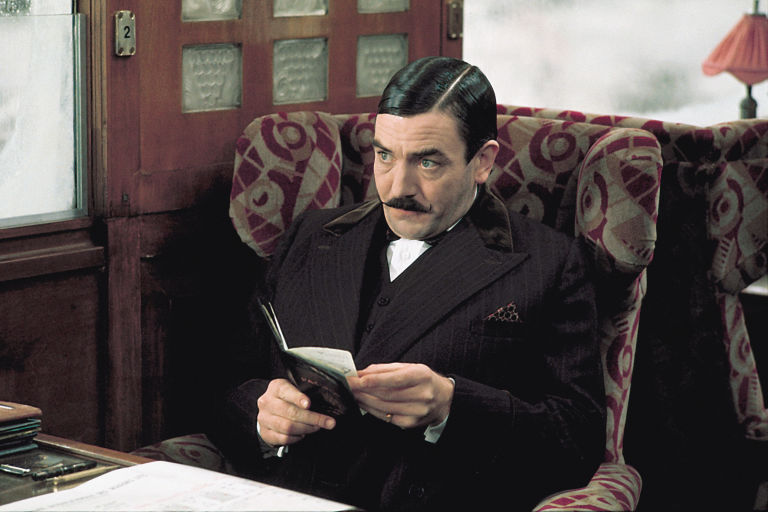
“It’s an unpopular opinion, but Finney is my favorite Poirot. Chalk some of this up to sentimental value – he was the first Poirot I ever saw in the very first Agatha Christie story I ever came across – but he totally embodies the character for me. I acknowledge and understand the accusations of overacting as Finney (not yet 40) has to act through the heavy makeup and body padding to bring the little Belgian detective to life. Yet, in doing so, Finney creates a Poirot who is a total outsider; someone for whom the detective’s quirks and eccentricities put him at a distance from everyone else aboard the Calais Coach and their murderous plot. I love the range we see from Poirot during each suspect interview: badgering Colonel Arbuthnot and Mary Debenham and exercising great restraint for Princess Dragomiroff and Greta Ohlsson. And his final summation of the case – fully the last half-hour of the film – is a tour-de-force. Even if I am only half-watching Murder on the Orient Express while doing other things, I will always lock in for Finney’s final monologue. He holds the screen in a way that every other Poirot (even the great David Suchet) can only aspire.”
5.Brad played Hercule Poirot, as played by Peter Ustinov, in Death on the Nile (1978).
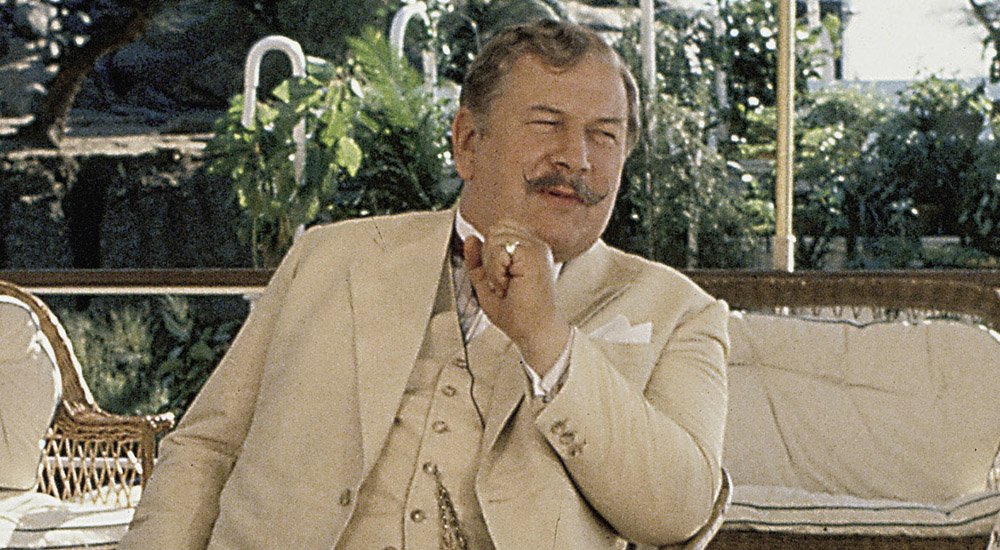
“This is a sentimental favorite. I will never argue that Ustinov is more faithful to the books than Suchet or Finney. Still, he played Poirot six times, and that body of work is uneven, ranging from the sublime (Death on the Nile) to the boring (Appointment with Death). Much of my appreciation for Ustinov comes from my love of Nile and, to a lesser extent, Evil Under the Sun, where he anchors exuberant casts full of fine actors and/or personalities who are all clearly having a ball being in an Agatha Christie murder mystery. Ustinov mines the character for comedy but never at Poirot’s expense. He is the least obsessive of the Poirots, and he chooses to inhabit his “foreignness” with glee, toying with suspects and pinning down killers with relish. No, I could not see him doing the dark stuff (Curtain, for example), and his relationship with Jackie in Nile is lighter in tone than what Suchet or even Branagh played. But I enjoy his big screen performance more than Finney’s, and I like the idea of his inhabiting this list for all the pleasure that his first two Poirot films gave me.”
4. Sergio played the second READER’S CHOICE, Nick and Nora Charles, as played by William Powell and Myrna Loy, in The Thin Man (1934).
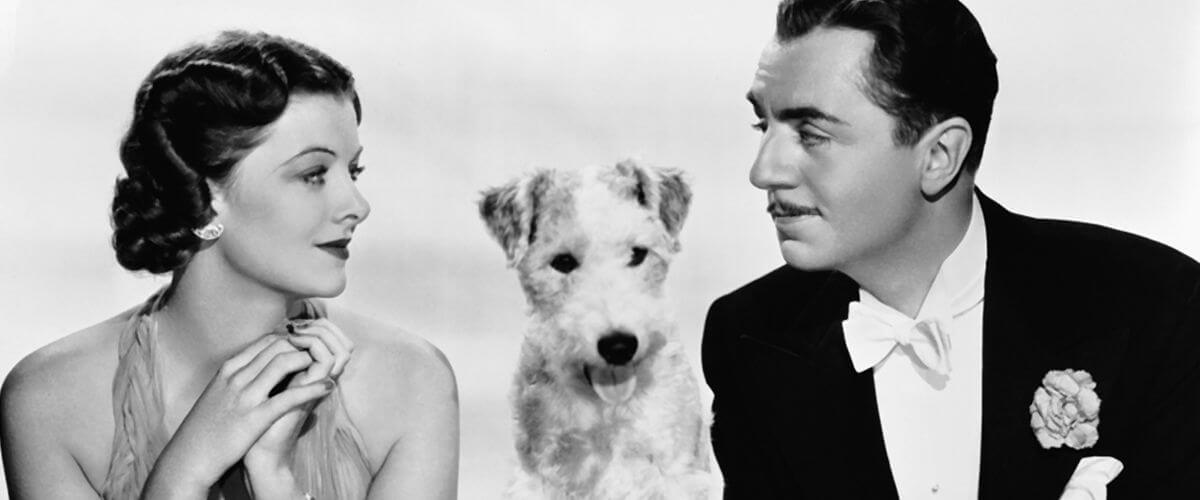
“The dream team of Myrna Loy and William Powell, who appeared together in thirteen films in the 30s and 40s, are utterly heavenly as Nick and Nora Charles. Hammett’s characters are a bit tougher in the book, more down to earth, but as portrayed by this duo on screen, the mixture of charm, sophistication and sheer good humor is unbeatable. The first film is the freshest and most delightful, but the sequel comes a very close second (though it’s the third that actually has the best mystery of the series).”
3. Sergio played Sam Spade, as played by Humphrey Bogart, in The Maltese Falcon (1941). Brad vetoed this pick. As a replacement, Sergio played Philo Vance, as played by William Powell, in The Kennel Murder Case (1933).
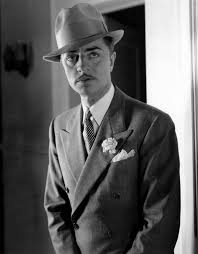
“The best Vance movie bar none, beautifully realized by director Mike Curtiz, especially with the creeping shots around the Coe household. The cast of characters is entertaining, the locked room mystery super typical of its kind and Vance, I believe, belongs here as the first American supersleuth of the GAD. At least in BISHOP MURDER CASE, a truly outstanding book, Van Dine and Vance deserve serious re-appraisal, 100 years after becoming the most successful detective in 20th century publishing up to that time.”
2. Nick played Sherlock Holmes, as played by Basil Rathbone, in The Adventures of Sherlock Holmes (1939).
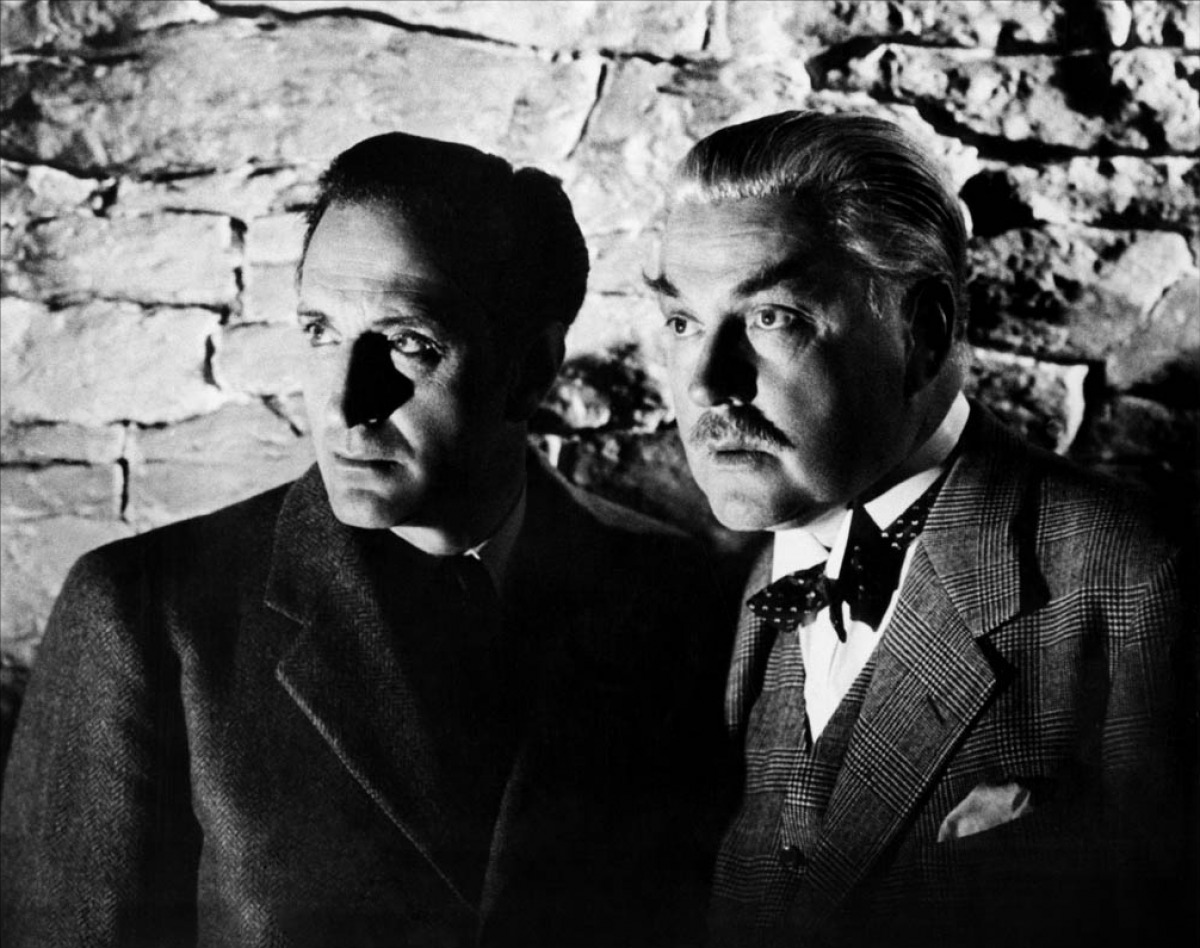
“The greatest sleuth of them all has been represented in the history of film more than any other fictional character, but Basil Rathbone remains the definitive big-screen incarnation. It is Rathbone’s legacy that has hung over the part for the better part of a century; supplanted only by Jeremy Brett and, perhaps more recently by Benedict Cumberbatch. Though he played the Great Detective fourteen times on screen and dozens of times on radio, soon growing tired of the part, here in The Adventures of Sherlock Holmes, Rathbone is still at his peak. His Holmes is alive and wiry, light and airy. Whether he’s tinkering with his violin and experimenting with the common housefly or disguising himself as a music hall performer (just one of the most delightful scenes in all of Sherlockian cinema), you can feel Rathbone’s joy at taking on the role. His repartee with Nigel Bruce’s comic Dr. Watson is delightful. And hearing Rathbone say, “Elementary, my dear Watson” – it just feels so right.”
And the #1 pick, played by Brad is . . . Sam Spade, as played by Humphrey Bogart, in The Maltese Falcon (1941).
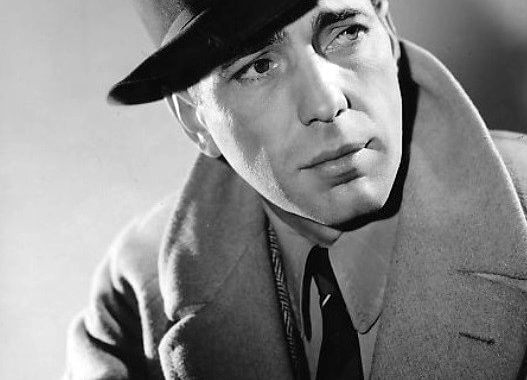
“Bogie could play good guys and bad guys with equal fervor, finding the darkness in the heroes and some sort of light (or fun?) in his baddies. Sam is a complex figure, determined to find the killer of his partner even though he didn’t much like the guy and was having an affair with his wife. He solves the case and sends the killer up the river, even though he has fallen in love with her. Bogart’s Sam has an actor’s field day opposite every other character: his playful interaction with the bad guys vs. his wary relationship with the cops; his contempt for his mistress, Ida Archer, (maybe the one person who churns up a little self-loathing on his part), sardonic lovemaking with Brigid, and genuine affection for his secretary Effie Perine (brilliantly played by Lee Patrick) all combine to make it impossible to take your eyes off Bogie throughout the film (which is good because he’s in nearly every frame of it!)”
So there you have it – our Top Twenty Screen Sleuth Performances of all time. What do you think of the list? Who do you wish had been included? Drop your thoughts in the comments below – we’d love to hear from you.
Our final draft of the year will be a ranking of The Eighteen Films Noirs that Were Included in Dead Men Don’t Wear Plaid.” In case you’re scratching your head over this one, I promise to give you an explanation in a future post. We won’t be gathering together for this draft until the fall, and I will give you plenty of time to watch the films. There won’t be any Reader’s Choice for this one, but we would love to hear you push for any of your favorites to make it to the top of the list.


It was great fun though my rant about the destruction of the Monna Lisa (that’s how we spell it in Italy – with one “n” it’s very vulgar) is meant to be taken with a large pinch of salt, OK?
LikeLiked by 1 person
I cut the extra “n”, as well as all those “u”s that you Brits stick into words to fancy them up! That’ll larn ya!
LikeLike
How very … American of you. 🤣
LikeLiked by 1 person
I don’t really understand how the drafting and vetoing works, so I thought you’d lost your mind vetoing Sam Spade! But we don’t need two Poirots – and certainly not Albert Finney. And if you’re following the comments, Nick, you must read The Name of the Rose.
LikeLike
One of these days, I will definitely get around to it!
LikeLike
These chats are always the best and this was no exception! Looking forward to the Fall!
LikeLike
I thought Paul Newman as Lew Harper and Ralph Meeker as Mike Hammer would be included for sure and was hoping to see Peter Sellers/Inspector Clouseau on the list.
LikeLiked by 1 person
Newman came awfully close, but with so many great successful sleuths we never got to the inept ones! As for Meeker, he is terrific as Mike Hammer, yet so unlikable that it didn’t occur to me to draft him, despite how much I love KISS ME DEADLY.
LikeLike
Pingback: CHECK OUT THE FALL ENSEMBLE: The Three Amigos Will Be Wearing Plaid | Ah Sweet Mystery!
Pingback: “The stuff that dreams are made of, Della” – The Perry Mason/Maltese Falcon Connection | Ah Sweet Mystery!