My favorite author is Agatha Christie. My favorite director is Alfred Hitchcock. And never the twain shall meet.
And why should they? Hitchcock wasn’t much interested in whodunnits, and goodness knows what Christie thought about the movie industry. (Actually, she loved going to the movies . . . as long as they weren’t based on her books!) Still, I’ve been playing a game for a few weeks now where I cross actors from one place in the film universe and see if they fit in the other space, and I have come upon three actors who performed in both a Hitchcock film and a Christie adaptation:
Ingrid Bergman was a favorite of Hitch’s, appearing in three of his films: Spellbound, Notorious, and Under Capricorn. None of these performances earned her an Academy Award, but Christie did! Bergman won her third Oscar for Murder on the Orient Express. Anthony Perkins co-starred with Bergman there – he was also in a little gem of Hitchcock’s called Psycho. Finally, Charles Laughton starred in Hitchcock’s Jamaica Inn, which I don’t much like, and Witness for the Prosecution, arguably the best Christie adaptation of all time.
When I tried to cross actors who performed for Hitchcock with those who guest-starred on Perry Mason, however, I struck gold. Over the next few posts, we’re going to look at these folks and the crossovers they made between three of Hitchcock’s most popular films and America’s favorite 60’s defense attorney. We begin today with my favorite Hitchcock and, as many of you might remember, perhaps my favorite film of all time: Rear Window.
You don’t need to hear me prattle on about Rear Window again. If you’re interested, read this article. If you want to know more, listen to the recent episode of Tipping My Fedora where I got to indulge in my passion with host and fellow fan, Sergio Angelini. The short story upon which the film is based, Cornell Woolrich’s “It Had To Be Murder,” has a small cast of characters: the man in the wheelchair and his servant; a friend who happens to be a cop; Mr. Thorwald, the fellow across the way who may have murdered his wife; and a couple of other neighbors who briefly (and quite literally) serve as window dressing.
Hitchcock made some alterations, giving the man in the wheelchair, L. B. Jeffries (James Stewart) a girlfriend in the form of Grace Kelly and replacing the servant with an insurance company nurse played by Thelma Ritter, neither of whom he deserves! The director then expanded the neighborhood to include an assortment of fascinating neighbors who are all living out their own dramas and mysteriously paralleling the lives of Jeff and his girl Lisa. The short story is fun – the film is rich, meaningful and highly entertaining.
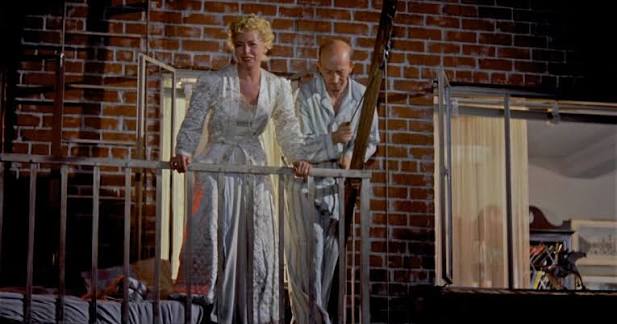
Only three members of this cast ended up guest-starring on Perry Mason. I wonder if you can guess who the third is, but we’ll start with Frank Cady. Frank was born in 1915 in California but grew up in Oregon. He returned to the Golden State to attend Stanford University, then moved to London where he performed onstage and made an early appearance on British TV in 1939. He returned to Stanford for graduate school, intent on an academic career, met his future wife and changed his mind about his job. He went to Los Angeles and made movies, appearing in small parts in lots of films, including some great noirs like Flamingo Road, D.O.A., and The Asphalt Jungle.
The film role that caught my eye was the Husband on the Fire Escape in Rear Window. With Sara Berner as his wife, they provided much of the comic relief in the film – until the death of their beloved dog becomes the pivotal moment where L. B. Jeffries (James Stewart) knows for certain that Lars Thorwald has committed murder. Berner delivers a heartbreaking statement that tears apart the façade of “neighborliness” within the community, at the same time setting the stage for the apartment dwellers to come together at the end and bear witness to the monster in their midst.
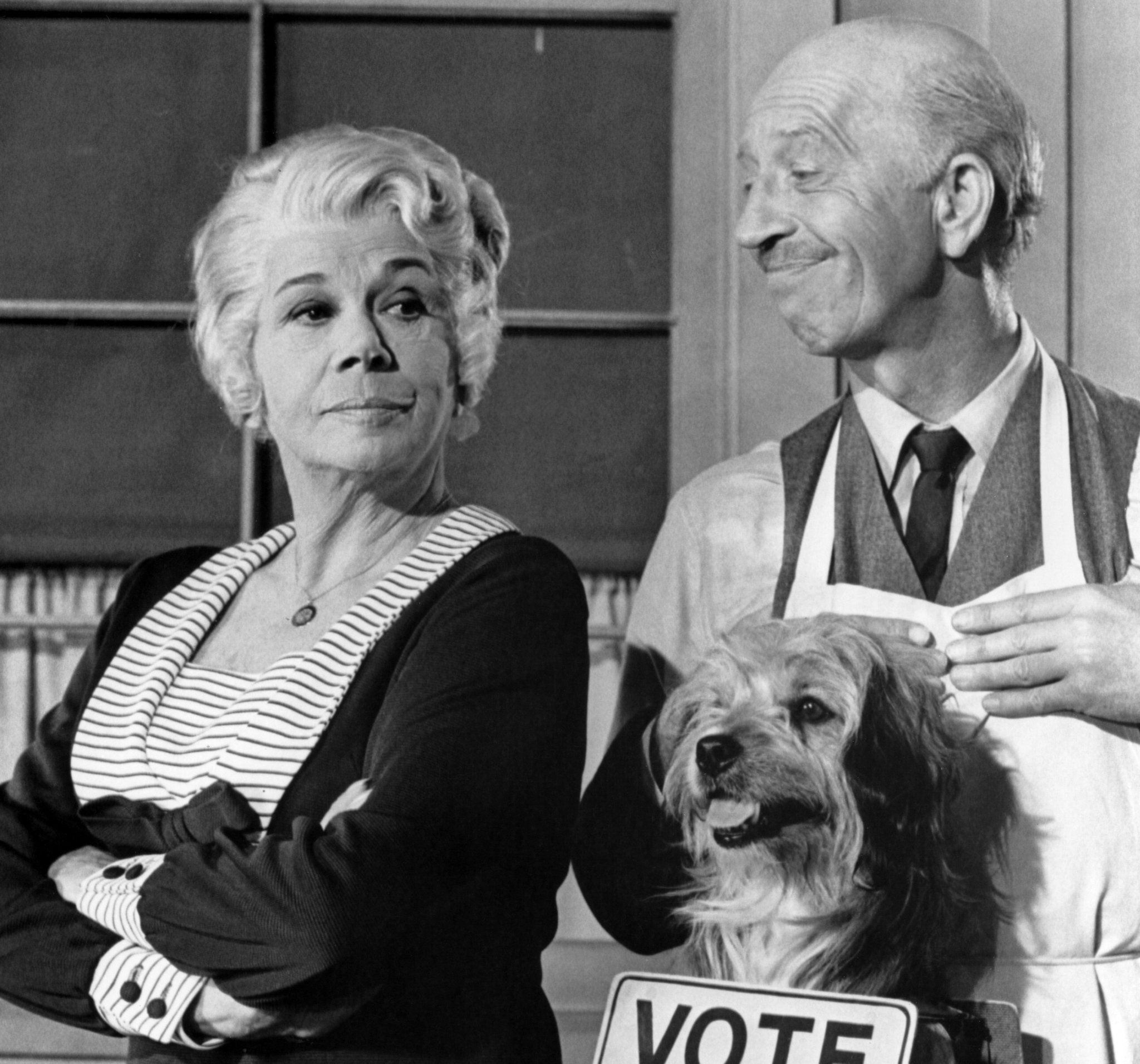
The reason I recognized Frank Cady over any of the other neighbors was because of his unique presence in 60’s TV. Cady was the only actor to play the same character simultaneously on three different situation comedies. The “rural” sitcoms The Beverly Hillbillies, Petticoat Junction and Green Acres existed in the same imaginary universe, and the actors from each of these shows constantly hopped from one show to the other. Cady played storekeeper Sam Drucker, beginning in Petticoat Junction, where he was one of only three regulars to appear in the show throughout its seven-year run (1963 – 1970). In Hooterville, a world of bucolic “crazies,” I guess you would say Sam was one of the more sensible ones.
When Green Acres premiered in 1965, the farm that Eddie Albert and Eva Gabor bought was located near Hooterville, and they shopped at Sam’s store; Cady sold them goods throughout that show’s six-year run. Although The Beverly Hillbillies predated both these shows by a year, running nine seasons from 1962 – 1971, Cady showed up as a guest star in 1968 and stuck around for two years. His final acting role was as Sam in the TV-movie Return to Green Acres in 1975, after which he retired to Oregon and lived to the ripe old age of 96.
Cady made one distinctive appearance on Perry Mason in the seventh episode of Season Five, “The Case of the Pathetic Patient,” which premiered on October 28, 1961. The case centers around Dr. Edley, played by Skip Homeier, who started his career as “Skippy” Homeier when he was a child and always played intense and troubled characters. Dr. Edley is a decent guy who has established a fine reputation after taking over his wife’s uncle’s practice when the old man retired and moved away. Now Edley wants to build a much-needed medical clinic in his suburban town adjacent to L.A., but he runs afoul of a former patient (Cady) who insists that the doctor ignored a serious hip fracture when he treated the man the previous year.
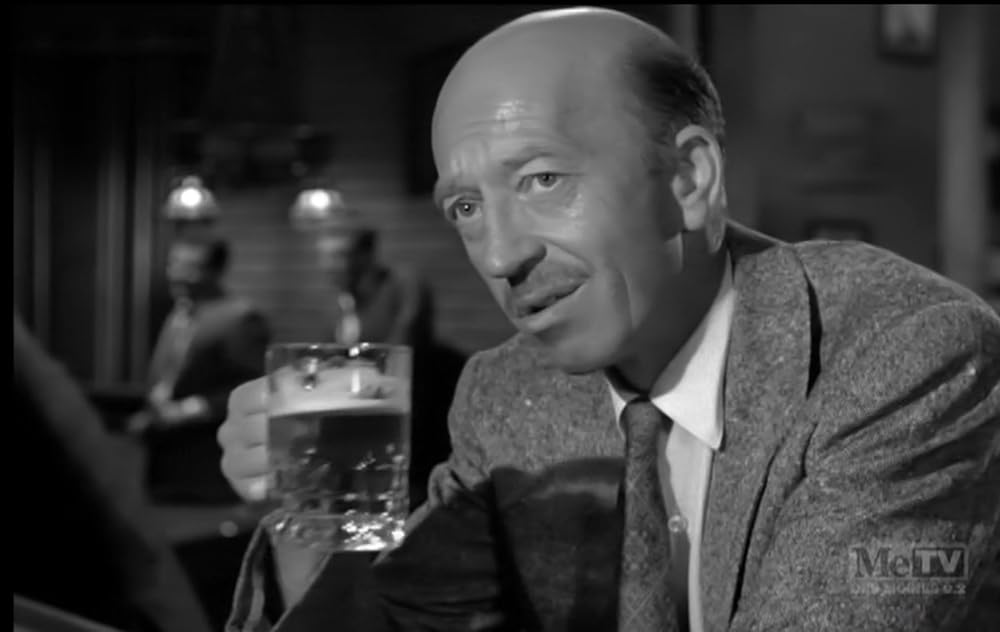
This seems altogether to be a scam, but a recent office fire makes proving it hard for the doctor, and he contemplates settling with the man for five thousand dollars. When the murder happens, it isn’t Cady who is killed but Dr. Edley’s wife’s former boyfriend, who it seems would do anything to get rid of his rival. Things become even more complicated when the police discover, while searching the medical office, the corpse of Edley’s predecessor in a flower bed! Are the two deaths tied together?
Spoiler alert: they are – and in a pretty lame way. After focusing most of the episode on the scheme that Cady and the dead ex-boyfriend (and maybe others?) tried to pull on poor Dr. Edley, Mason pulls a “surprise” murderer out of a hat and instigates one of the lamest confessions in the history of the show. It doesn’t help that the killer, a Perry Mason stalwart, is buried under tons of make-up and gives a dull, muted performance.
* * * * *
Wendell Corey was practically American royalty. Directly descended from Presidents John and John Quincy Adams, he would eventually become president of the Academy of Motion Pictures Arts and Sciences, a board member of the Screen Actors Guild, and he would serve on the Santa Monica City Council.
His origin story is one I especially like: Corey was selling appliances at a Springfield, MA department store right after high school and went to visit a friend who was a performer with the Springfield Repertory Theatre. They were producing Street Scene by Elmer Rice, and they needed an extra man to play a Swedish janitor. Corey was offered the part – and remained with the company for a year.
Thus began a long stage career until, in 1945, he was sighted in another Rice play by Hal Wallis, who had produced, among many films, The Adventures of Robin Hood and Casablanca, and who convinced Corey to accept a film contract with Paramount. For the rest of his career, he would alternate between films and theatre, with an occasional foray into television.
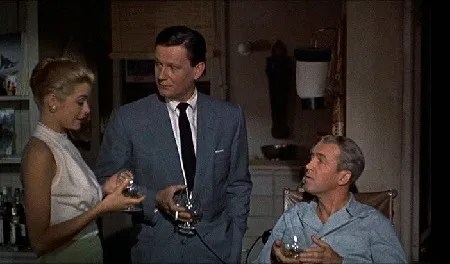
One of his most memorable film roles was as Lieutenant Thomas Doyle, L. B. Jeffries’ buddy in the police force, who tries to be the voice of reason when his pal’s outlandish theories of murder get out of hand. You might think that, compared to the sparkle of Jimmy Stewart’s scenes with Grace Kelly or the wit behind his arguments with Thelma Ritter that the scenes with Doyle would pale in comparison. But John Michael Hayes’ screenplay is so brilliantly assured that the scenes between the two men are wonderful.
Corey made one appearance in the ninth and final season of Perry Mason: Episode Twenty-Five, “The Case of the Unwelcome Well” premiered on April 3, 1966. He plays what I can only describe as an oligarch named Jerome Klee, and those piercing eyes which in Rear Window were so clear and intelligent, here are cold and cruel. It does real credit to the man that the writers don’t kill him off until the thirty-minute point of a fifty-minute-long episode.
The episode opens in the wide open spaces where a group of oil surveyors are about to perform tests on a farmer’s property. But then the farmer himself, Jason Rohan (Paul Brinegar, whose performance would fit perfectly on The Beverly Hillbillies) shows up with a gun to drive these fellers off his land. The head surveyor Allan Winford (James Best, who among many other credits, co-starred in “Jess-Belle,” my favorite episode of The Twilight Zone) contacts the oil company’s lawyer, one Perry Mason, who informs Rohan that his new wife Minna (Gloria Talbott, not so much a “Scream Queen” as a “Scream Princess,” who once Married a Monster from Outer Space!!!) signed the contract that would allow the surveyors to test for oil. Mason promises that if oil is actually discovered, it will make Rohan, his wife and his two grown sons millionaires, whereupon the family immediately begins spending fistfuls of money they don’t have! (Oh-oh!)
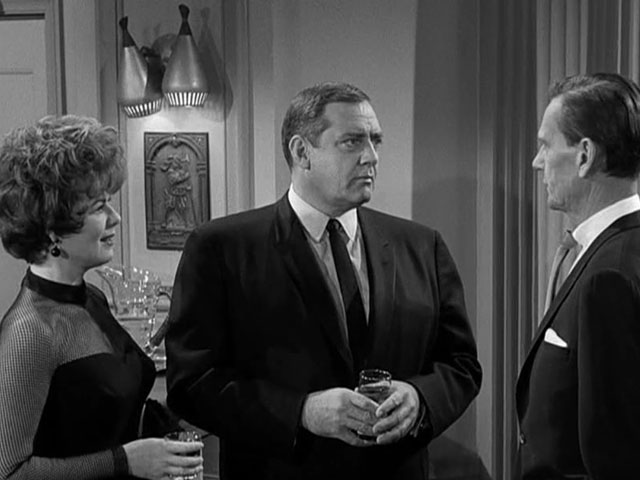
From there we switch to the fabulous home of Mr. Jerome Klee, where an uncomfortable dinner party is about to commence. These scenes have all the best atmosphere of a closed circle mystery, with each member of the party could easily turn out to be the killer. Will it be Klee’s ex-wife (Marilyn Erskine) a successful author who is still unaccountably in love with her husband? Current mistress Monique Martin (Danielle De Metz, who one hopes would have gone to acting school before taking this job)? Business assistant Harry Lannon (another showcase for Les Tremayne, an eight-episode veteran who, while we’re on the subject, played the auctioneer in a pivotal scene of Hitchcock’s North by Northwest!)? Milquetoast secretary Ross Darley (William Lanteau)? Or honored guest Prince Ben Ali Bhudeem, who has come to represent his brother, the king of a Saudi-like country, in an important oil deal?
What comes out of this uncomfortable evening means huge profits for Klee and a huge headache for the farmer’s family and the surveyors – because Klee has decided to cap the new well for ten years. Obviously, Klee exists to make suspects out of them all, but the teleplay does a great job of building up the suspense as to when the killer will strike, and for once the murder is committed right before our eyes.
From there, the case has only twenty minutes to identify the defendant, hold the trial, and have Perry expose the real killer. It doesn’t feel rushed, though, and for once the culprit, while a perfectly logical choice, is no more obviously guilty than anyone else in the large circle of suspects. This is a fun case, making terrific use of Wendell Corey’s talents.
* * * * *
Which leaves us with one more actor to talk about – one more fellow who had a featured role in Rear Window and then appeared as one of the most memorable guest stars in the history of Perry Mason. I am talking, of course . . . about Raymond Burr.
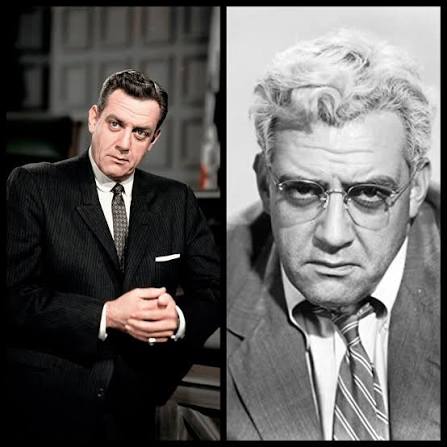
Burr was born in 1917 in British Columbia. When he was six, his parents divorced and his mother moved with the children to Vallejo, California. Like another larger than life and highly imaginative performer of the time named Orson Welles, Burr could recount a colorful history of where he went and what he did where the story of one event or milestone often contradicted another.
Suffice it to say, Burr began his acting career in the theatre, beginning in Canada and possibly touring in different parts of the world before ending up in Los Angeles. He continued to flourish onstage, both in L.A. at the Pasadena Playhouse and in New York. It was while he was performing on Broadway in The Duke in Darkness by Patrick Hamilton that he was scouted and signed by RKO Pictures. He became an invaluable performer of villainous parts in films across the genre field. Even when he played a detective, as he did in the 1948 film noir Pitfall, he was reprehensible, but he imbued his nasty characters with such rich characterization that he was memorable even in small parts.
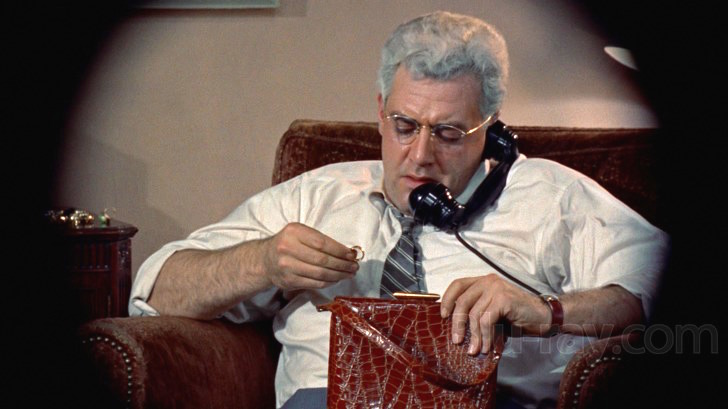
He was also extremely self-conscious about his weight, and even in his 20’s he played characters who were much older. Burr claims that he and fellow actor William Conrad split the heavy roles. In 1951, Burr played a role that would eventually become a breakthrough in his career, that of an aggressive prosecutor in A Place in the Sun. In 1954, Alfred Hitchcock cast him as Lars Thorwald, the henpecked salesman who L.B. Jeffries suspects has disposed of his nagging wife in the East River and other parts of New York. In the story, “It Had to Be Murder,” Thorwald is just a neighbor, but in Hitchcock’s world, he is a parallel to Jeff himself, who endures the plaintive nagging of his own girlfriend Lisa to settle down and marry her. Both men want to be free: Thorwald uses a saw to get his way, while Jeff uses his camera and his wits to prove Thorwald guilty and distract from his own troubled personal life.
In 1956, actress-turned-producer Gail Patrick Jackson and her husband teamed up with Erle Stanley Gardner to create a dramatic series based on Gardner’s immortal character. The author had hated the six Warner Brothers movies adapted from his books in the mid-1930’s, and he despised the radio program Perry Mason which was more of a romantic soap opera than a mystery series (and which, when it transferred to television, had to drop the moniker and become The Edge of Night); this time, thought Gardner, they were going to do things right!
Jackson remembered a film she had seen and the performance of Raymond Burr as the District Attorney. He was called in to read for the role of Hamilton Burger, which he would most likely play opposite Efrem Zimbalist, Jr. as Mason. Burr asked if he could also be considered for the leading role, and after he read for Jackson, she told him that he would be a perfect Mason – except for his weight. Burr spent the next month on a crash diet, losing sixty pounds. He then retested and won the role that would make him a household name and earn him two Emmys. When Perry Mason ended in 1966, Burr jumped to NBC and became Chief Ironside for eight seasons. After that, he attempted unsuccessfully to start a couple more series and performed in short-term projects. Then, in 1985, Burr made the first of thirty TV-films based on the Perry Mason series. With Barbara Hale by his side as Della Street (and Paul Drake, Jr. played by Hale’s own son, William Katt), Burr played Perry Mason until his death in 1993.
Surely, we can’t consider the man who played the titular star of a series as a “character actor turned guest star!” But, wait! During the ninth season, even before they realized it would be the end of the series, the producers got more playful than usual. Screenwriters Jackson Gillis and Ernest Frankel came up with “The Case of the Dead Ringer,” the twenty-sixth episode, which premiered on April, 17, 1966, and is nothing more nor less than a showcase for the series’ star.
Mason is representing Barbara Kramer (Indus Arthur) in a lawsuit related to her late father’s business – or something or other. Frankly I couldn’t follow what the heck the problem was with Amalgamated Razzlefram or Whatever. Suffice it to say that Barbara and a former partner (maybe?) named Jess Parkinson (Maurice Manson) were up against the company’s CEO Otis Swanson (Oliver McGowan), and Barbara’s side has the advantage due to Mason’s expert handling of the witnesses.
Then Otis’ ne’er-do-well nephew Dan Swanson (Stewart Moss) comes up with a plan: during his habitual bar-hopping, Dan spied a sailor on leave who looked very much like a certain best-defense-lawyer-in-the-world. Dan, Otis and Otis’ assistant William March (it’s good to see Henry Beckman again, although he’s largely wasted here) bribe the sailor, Mr. Grimes, to impersonate Perry Mason and attempt to bribe the next witness, former company secretary Sandra Dunkel (Arlene Martel).

In court, Sandra breaks down and accuses Mason of attempting to bribe her to perjure herself. Other witnesses from the hotel – including a priest! – are brought in to corroborate her accusations. Perry loses the case and the good faith of Barbara and Mr. Parkinson. Perhaps the best scene in the episode is the one where Della Street and Paul Drake lash out furiously at the disillusioned clients, daring anyone to accuse Perry Mason of being crooked! Barbara strikes out on her own, romancing the nephew to try and come up with something to prove her father had been cheated. This puts her on the scene when Otis Swanson is found dead in his office. (Rather than Mason, it’s Paul Drake who enters the house and literally trips over the body!)
So here we have a murder trial with five suspects – except Sandra Dunkel and William March only testify briefly, and the nephew and Parkinson don’t even make it to the stand. No, the last half of the hour is basically turned over to Raymond Burr and Raymond Burr, exercising their right to free speech (and, in one case, outrageous overacting) on a split screen. Burr-as-Grimes is clearly channeling Alfred Doolittle, right down to the raucous Cockney warbling. It’s over-the-top to the extreme, but you don’t much mind because Burr is clearly having a lot of fun.
And listen, I try not to spoil these episodes much in my reviews – but if you think Raymond Burr was going to “guest star” as a suspect in a case and not have the opportunity to make a dramatic courtroom confession, then you don’t know Burr, and you don’t know Perry Mason!
* * * * *
In our next installment, we’re offering a two-parter (there were so many actors and episodes that we had to split it!) about another film classic from the Hitchcock archives. Part One features some of the most iconic character “biddies” in TV history!
Mother would approve!


I think Jon Finch (Death on the Nile/Frenzy) and Marlene Dietrich (Witness for the Prosecution/Stage Fright) would also crack the Christie/Hitchcock list.
LikeLike
And also James Mason (Evil Under the Sun/North By Northwest).
LikeLike
C. Aubrey Smith and Judith Anderson actually make it from the same pair of movies! (And Then There Were None/Rebecca)
LikeLike
Kim Novak (The Mirror Crack’d/Vertigo)
LikeLike
George Sanders oiled his way through both Endless Night and Rebecca.
LikeLike